
Marin · Portable Restroom Rentals
ADA Portable Restrooms
Wheelchair-accessible units with ground-level entry, grab bars and interior turning space, for events and public sites.
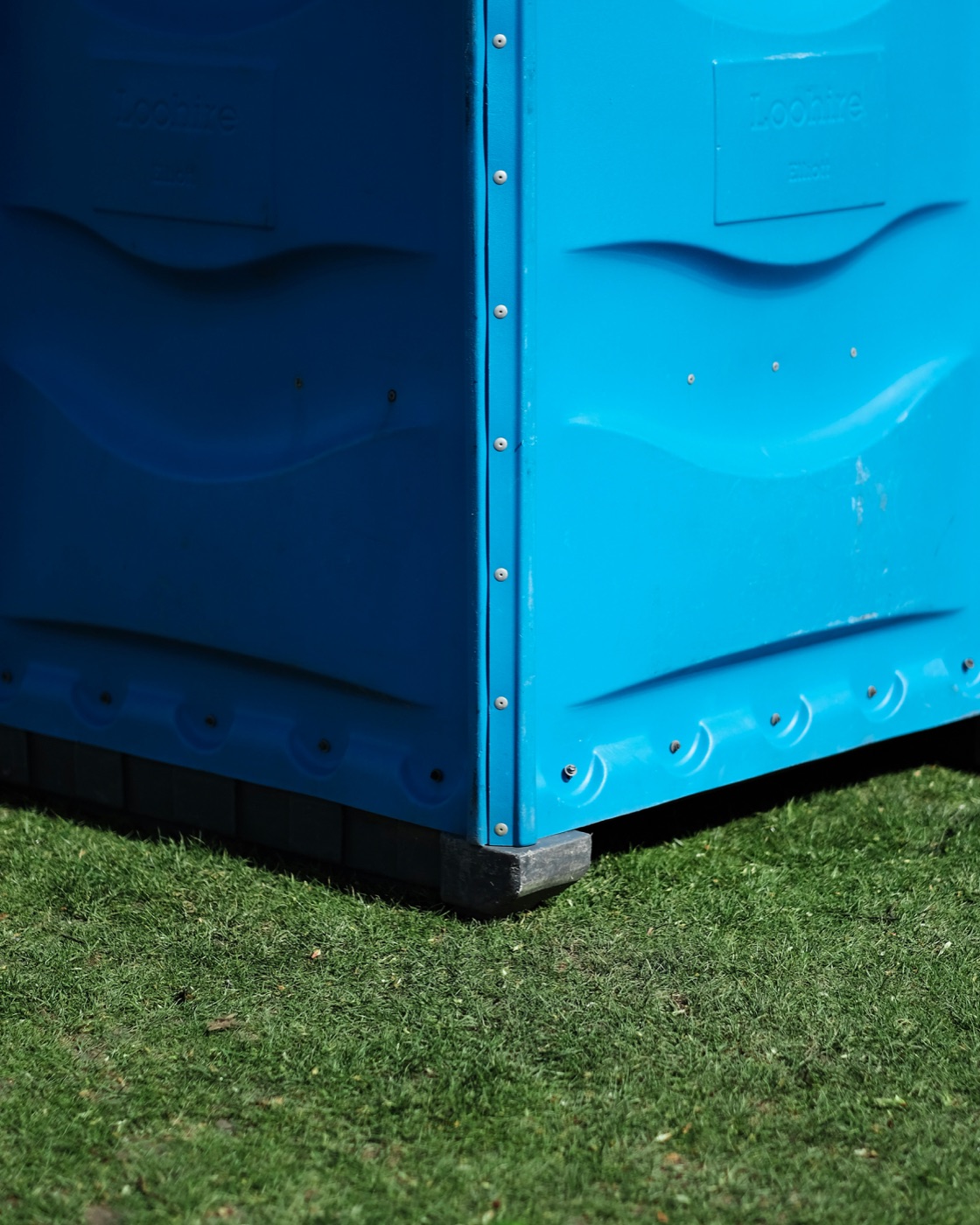
ADA Portable Restrooms · Marin
What Makes A Unit ADA-Compliant
An ADA portable restroom is substantially larger than a standard unit, with a ground-level entry or a shallow ramp instead of a step, a wide outward-opening door, grab bars either side of the seat, a lowered paper holder and enough clear floor for a wheelchair to turn inside. That last requirement is what drives the footprint: a compliant unit needs roughly a five-foot turning circle, which is why these are close to twice the size of a standard cabin. They are also the reason placement matters more than it does for anything else we rent. A ramp into soft grass or a unit at the top of a curb is not accessible in practice however compliant the cabin is. We supply accessible units across Marin for public events, agency and municipal work, larger weddings, and job sites where the general contractor or the contract requires one alongside the standard construction porta potties.

Why Go With Us For Accessible Units
Accessible units get treated as a checkbox more often than they should. A unit gets delivered, it goes wherever there is room, and nobody notices until an event day that the approach runs across a lawn or the door opens onto a slope. We site accessible units first rather than last, on the firmest and flattest ground available and on the same path everybody else is using, because a compliant unit somewhere unreachable satisfies nobody, least of all the person who needed it.
- Sited first, on firm level ground, with the approach considered rather than only the cabin.
- Delivered from the same yard and on the same route as your standard units, so it is one order and one invoice.
- Available for single-day events, weekend bookings and long monthly site rentals alike.
- Serviced on the same weekly schedule, and the extra interior space means it takes longer and is priced honestly.
- We will tell you when your event or contract actually requires one, rather than after somebody complains.
- Matting and boards available where the only sensible location is on grass or gravel.
Reasons To Include An Accessible Unit
Some of these are legal requirements and some are simply what a decent event looks like:
The event is open to the public
Festivals, fairs, races, farmers markets and municipal events all have accessibility obligations, and portable facilities are part of them. In practice this means at least one accessible unit, and more as the total unit count rises.
A public agency or institution is the client
County, city, school district and utility contracts routinely require accessible facilities on site as a term of the contract. If you are bidding that kind of work in Marin, it belongs in the number from the start.
The guest list includes someone who needs one
Weddings and family events with older relatives or wheelchair users. This is the most common reason we get asked, and it is worth planning properly because trailers usually have steps and are not an answer on their own.
A general contractor requires it on site
Many commercial GCs specify an accessible unit on every job regardless of the current crew, because crews change and the requirement does not. On managed Marin sites it is close to standard.
The site itself is a public space
Work in a park, on a trail, at a beach access point or on a municipal property. The facility is temporarily replacing a public one, and it needs to serve everyone the public one did.
Anyone on the crew needs one
Straightforward and often overlooked. A worker with a mobility limitation has the same right to usable facilities as anyone else on the site, and a standard unit does not provide them.
Not sure whether your event or your contract obliges you to have one? Describe it on the phone and we will tell you where you stand. Call: 415-322-7715
How We Work
Quote on the phone, delivery in two days, weekly service on a fixed day, pickup when you say.
1. Working out the count
For events, the usual guidance is at least one accessible unit and roughly five percent of the total once you are running larger numbers. For job sites it is normally one, unless the contract says otherwise.
2. Choosing the location
This is the part that takes actual thought. Firm level ground, an approach without a curb or a step, and a position on the same route as the other units rather than tucked around a corner. We will walk it with you at an event venue.
3. Delivery and setup
The unit is set, leveled and checked for door swing and ramp transition, and stocked. Where the ground is soft, matting or boards go down at the same time rather than being added after somebody struggles.
4. Servicing
The same weekly pump-out, wash-down and restock as everything else on the route. Accessible units have more interior surface, so the visit takes a little longer and the grab bars get wiped down as part of it.
Accessibility In Practice
What the requirement means once the unit is on the ground:
Size and turning space
A compliant unit gives roughly a five-foot clear turning circle inside, which is what makes it so much larger than a standard cabin. That footprint has to be accounted for in the site plan; it does not fit in a spot sized for a standard unit.
Ground-level entry and ramps
Most accessible units have a low threshold or a shallow integrated ramp. The transition from the ground to that threshold is what usually fails: a lip of gravel or a soft edge is enough to stop a wheelchair, which is why the ground matters as much as the cabin.
Grab bars and interior fittings
Bars either side of the seat, a lowered paper holder and a sanitizer dispenser within reach from a seated position. These are checked at delivery and again at every service visit.
How many accessible units an event needs
At least one, always. Beyond that, around five percent of the total unit count is the common planning figure, and larger public events in Marin are generally held to it. Spread them out rather than clustering them at one end of the site.
Where they should go
On the accessible route people are already using, near the other facilities rather than off on their own, on pavement or firm compacted ground. Matting solves grass; nothing solves a slope, so pick somewhere flat.
Accessible units versus restroom trailers
A restroom trailer is a better experience for most guests and worse for wheelchair users, because it usually has steps. Pairing a trailer with a ground-level accessible unit is the normal arrangement at Marin weddings and larger events.
Family and baby-change use
The extra space inside means accessible units get used by parents with small children and by anyone who needs a hand from a companion. Ordering one on an event with a lot of families is worth it for that alone.
What An Accessible Unit Costs
An ADA unit runs above a standard one, typically $200 to $350 a month on a site rental and $175 to $350 for a weekend event. The difference reflects a larger cabin, a bigger truck footprint and a longer service visit. What moves it:
- How long you keep it. Monthly rates on job sites are far better per day than an event weekend, same as for every other unit we rent.
- How many. On events needing several, the additional units are cheaper than the first, and spreading them across the site costs nothing extra.
- Where it goes. Pavement is straightforward. A location needing matting, boards or a longer hose run takes more time on delivery and on every service visit.
- What else is on the order. An accessible unit added to an existing job site rental is cheaper than a standalone delivery, because the truck is already coming.
- Service frequency. Weekly is included on monthly rentals. Busy public events sometimes want a mid-event service, and that is quoted separately.
- Timing. Summer weekends are peak in Marin and accessible stock is more limited than standard stock, so late bookings have fewer options.
Quotes are flat and include the delivery, the servicing and the collection. Most accessible units go out alongside a standard order, and the pricing for those is on the porta potty rental and construction restroom pages. Everything we deliver comes off the same yard and the same routes as our portable toilet and trailer rentals.
Frequently Asked Questions
Do you offer ADA-compliant units?
Yes, and they go out on the same Marin routes as everything else. An accessible cabin is roughly twice the footprint of a standard one, with a shallow ramp or ground-level threshold, grab bars beside the seat, lowered fittings and room inside to turn a wheelchair. Public events and most agency contracts are obliged to provide at least one.
How many accessible units does an event need?
At least one, and roughly five percent of your total unit count once the event gets large. Spread them across the site rather than putting them all in one place, so nobody has to cross the whole venue to reach one.
How much space does an accessible unit take?
Considerably more than a standard unit, because of the five-foot turning circle inside. Plan for roughly twice the footprint, plus a clear approach with no curb, step or soft edge between the path and the door.
Can it go on grass?
Yes, with matting or boards down first. A ramp that ends in soft turf is not usable, so if grass is the only option, the surface treatment has to be part of the order rather than an afterthought. Firm compacted ground or pavement is always better.
Is a restroom trailer accessible?
Usually not on its own, because trailers have steps. The standard arrangement for Marin weddings and public events is a trailer for general use with a ground-level accessible unit alongside it, sited on the same path.
Does a construction site have to have one?
It depends on the contract and on who is working there. Public agency work in Marin generally requires it, many commercial general contractors specify it as a matter of policy, and any site with a worker who needs one certainly does. Ask us and we will spec the site properly.
Need a restroom in Marin?
Dates, numbers and an address are all we need. We call back inside one business hour with a free estimate and a flat price.
Or call us now: 415-322-7715